
Longtaitou Festival
龙抬头 · Lóng Tái Tóu
The story behind it Origin & legend
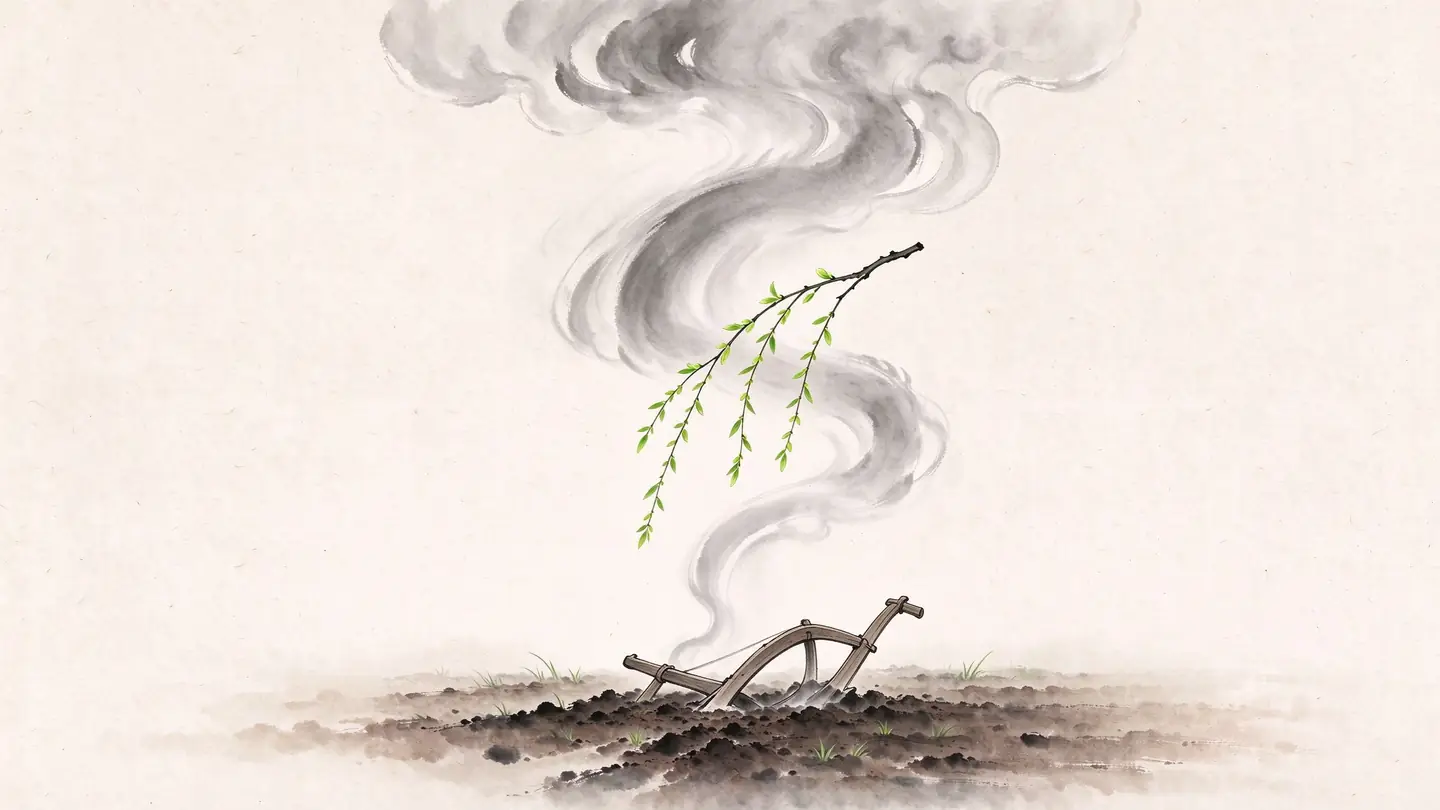
Longtaitou — "the dragon lifts its head" — falls on the second day of the second lunar month, as the New Year period ends and spring ploughing begins in northern China. The "dragon" is not a beast but a star pattern: the Azure Dragon (苍龙) of the eastern sky, whose head, the star group the old astronomers called the Horn, was seen to climb above the horizon at dusk around this date.
In legend the dragon is also the god of rain, and the day carries a story about drought. When the Dragon King brought rain against the Jade Emperor's orders, he was pinned under a mountain and told he would be freed only when "golden beans bloom". On the second day of the second month people fried soybeans and popped corn until they split open like little golden flowers — 金豆开花 — and the dragon was released. Ever since, the day has been tied to rain.
The festival sits on the seam between the holiday season and the working year. It closes the long New Year period, marks the point where the weather breaks and the fields open, and — in a very practical way — is the first day of the year on which the barber's chair is allowed to be used again.
Its emphasis differs sharply by region. In the north it is a farming festival of rain, seed and hair-cuts; in much of the south the same date is kept as the birthday of the Earth God (土地公), a harvest deity, and marked with offerings and shop feasts rather than ploughs.
What it means Cultural significance
- Spring begins in earnest
- The festival marks the turn from the sleeping winter to the farming year, when rain, ploughing and growth restart.
- The farming clock restarts
- In the north the second lunar month is when the frost gives way and ploughing begins. The date is pinned to the point of the year when rain is most needed, which is why its central figure, the dragon, is a rain god and not a decoration.
- A deadline for the barber
- By custom no one cuts hair during the first lunar month, so the second day of the second month is the first day a haircut is allowed again. The rush is not superstition alone; it is a month of demand let go in a single day.
- The last day of the holiday season
- Longtaitou closes the long New Year stretch. From here the festivals stop and work in the fields and workshops starts. It is the border between celebrating and producing.
- "Dragon" names as a wish for rain
- Renaming ordinary food after parts of the dragon — noodles as whiskers, pancakes as scales — is a form of prayer: you invite the rain-bringer to the table by eating him, piece by piece.
Hour by hour A day in the festival
- Before dawn · the water taboo
- Some households leave the well alone until after sunrise, since the dragon is said to be rising in the water. It is the quietest hour of the festival.
- Early morning · breakfast by its dragon name
- Noodles as whiskers, pancakes as scales, dumplings as ears; the first meal is eaten with the names, not the flavours, in mind.
- Mid-morning · the barber's queue
- The busiest hours at the salons. A first haircut since the New Year is the day's main act, and shops that normally take walk-ins are booked solid.
- Noon · the granary circles
- In the north, ash or grain is scattered in rings on the ground to picture a full granary, and a little grain is set in the middle. Then the stove is lit again.
- Afternoon · sweeping the house and yard
- Bedding is aired, corners swept and, in some regions, the beams tapped — the ritual hunt for the insects that wake with the weather.
- Evening · the dragon-named dinner
- The main meal repeats the morning's naming, often with a fish or a spring pancake. In the south the day closes at a temple, or with a shop's first shared feast.
What people do Customs & activities
- Getting a haircut (理发 · 剃龙头)
- Barbers have their busiest day of the year; a first haircut after the first month is thought to bring a good year. Shops open early and prices often rise.
- Eating dragon-named food (龙食)
- Noodles are "dragon whiskers" (龙须面), spring pancakes "dragon scales", dumplings "dragon ears", and fried cakes "dragon guts". Calling food by a dragon part is how the day asks for rain.
- Drawing granaries (打囤 · 围仓)
- In the north, people scatter rings of ash or grain on the ground, circles within circles, to picture a full granary, and set a little grain in the centre. It is a wish spoken with a broom.
- Calling the dragon in (引龙)
- A line of ash is trailed from the stove or the water jar to the yard or the well, "leading" the dragon to the household and, with it, the spring rain.
- Frying beans and popping corn (炒豆 · 爆玉米花)
- Beans and corn are parched until they split. The crackle echoes the legend of the golden beans and, practically, is said to drive off the insects that appear as the weather warms.
- Sweeping out the pests (驱虫)
- Before the insects wake for the year, houses are swept, bedding aired and, in some regions, the beams tapped and a little ash laid along the walls.
- Visiting the earth god's temple
- In parts of the south the day doubles as the birthday of the Earth God, so households and shops make offerings and, in business districts, hold the year's first shared feast.
- Starting the year's work
- Carpenters, masons and farmhands traditionally took up their tools again on this day. It marked the return to work as much as the start of the season.
How it varies across China Regional differences
- North vs South: ploughing or praying
- In the north the festival is tied to the farming year — rain, seed and tools; in the south it is often read as the Earth God's birthday, a day of offerings and shop feasts. The name is the same; the content is not.
- Barbers' day, city by city
- The haircut taboo runs through the whole first lunar month, so demand piles onto 2/2 everywhere. In large cities salons take appointments; in small towns queues form outside the door before opening.
- The granary-drawing custom
- Rings of ash on the ground (打囤) are a northern habit and are rare in the south, where the same wish for a good harvest is expressed at the temple instead.
- Dragon food, region by region
- Noodles, pancakes and dumplings carry the dragon names in the north; southern tables borrow them less and lean on fresh spring greens and the Earth God's offerings.
- How it changes overseas
- In overseas Chinese communities the day is mostly remembered for the haircut, taken on the nearest weekend — a low-key festival that survives as one errand rather than a full holiday.
What to say — and what not to Greetings
- Say: 龙抬头,好运来
- "The dragon lifts its head; good luck arrives." It suits friends, family and colleagues. Note the comma: rushed together as one line the two halves blur, so most people pause between them.
- Say: 二月二,龙抬头
- Simply naming the day is itself a greeting here, and it works as a light, seasonal hello — especially to farmers and older relatives who are watching the weather.
- Don't say: 龙抬头快乐
- A blunt "Happy Longtaitou" sounds odd, because the day is about weather, work and rain rather than celebration. Talk about the dragon, the rain or the new season instead of a generic "happy".
- To whom: colleagues and neighbours first
- Unlike the New Year, this is not a household-visiting festival. The usual greeting is a quick one between colleagues — often about the haircut — not a formal call to elders.
- If you are not Chinese: ask about the haircut
- The simplest, safest line is to ask whether the person has had their 二月二 haircut. It shows you know the custom and gives them an easy, cheerful thing to answer.
How to prepare Before the day
- Book the barber early
- Shops fill up for the whole day, so many people make an appointment well before the second day of the second month.
- Know the day's salon price
- The second of the second month is the one day salons reliably raise prices — a basic cut can cost double. Booking ahead is normal; walk-ins wait.
- Plan the dragon-named meal
- Decide which foods will carry the dragon names and buy the flour or noodles a day ahead. Markets in the north are busiest on the morning of the second.
- Gather ash or grain for the granary signs
- The "granary" circles are drawn with ash from the stove or with grain. Have a small container ready the night before if you want to keep the custom.
- Check what the day means locally
- In the north it is a farming festival; in parts of the south it is the Earth God's birthday. Asking locally is faster than guessing which set of customs applies.
- Get the haircut before the deadline
- The taboo on haircuts runs through the whole first lunar month, so demand collapses onto a single day. Grooming that can wait is better booked for the day before or after.
- Check and repair the tools
- In farming regions this is the traditional day to sort seed and put the plough and hand tools in order for the coming season — a day of preparation, not of sowing yet.
What not to do Taboos
- Do not touch a needle or thread
- An old northern taboo holds that needles could prick the dragon's eyes on the day it raises its head, so sewing is left for another day.
- Do not use the stone mill or the grindstone
- In the north the mill, which would "grind the dragon's head", is left unused for the day, and the well and the waterside are avoided too — the point is to leave the dragon undisturbed as it wakes.
- Do not chop or cut with an axe
- Axes and heavy blades are put away on the same reasoning as the needle: a sharp edge "cuts" the dragon, and with it the year's new growth.
- Do not do the laundry at the waterside
- Washing at the river is thought to dirty the dragon's water as it lifts its head; where water is scarce, the taboo also saves it for the fields.
- Do not fetch water before dawn
- Some households avoid the well early on this day — the dragon is said to be rising in the water, and a bucket would disturb it.
- Do not start a quarrel in the house
- As at New Year, the day is kept calm; an argument on the day the farming year starts is thought to set the tone for the whole season.
- Do not wear out the day in idleness
- The old advice is to begin some work — at least to tidy and put the tools in order. A day of complete rest is thought to invite a slack year.